
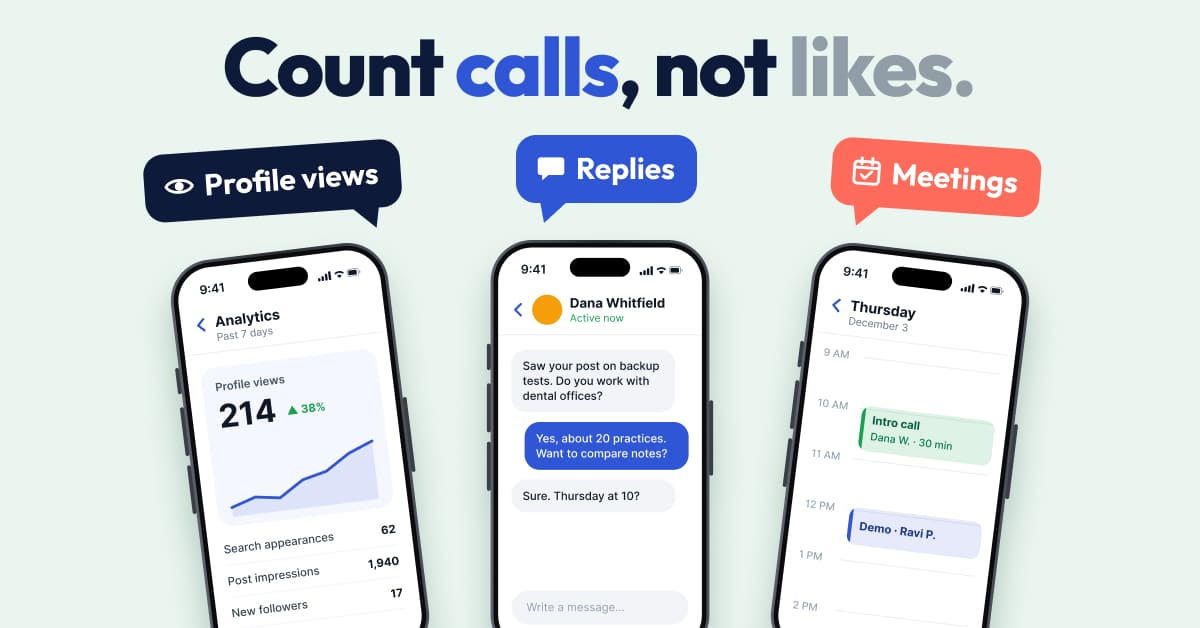
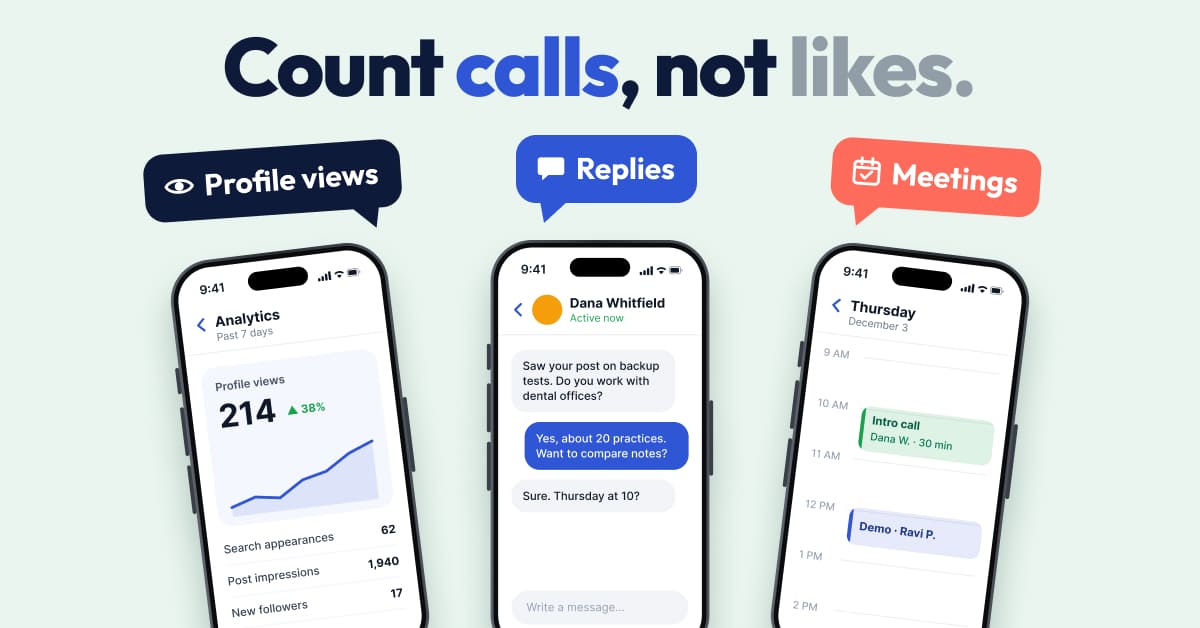
Set no more than three social media goals for 2027, and give each one a single revenue metric and a single leading metric you control. For a B2B company, the revenue metrics are qualified conversations, meetings booked and pipeline touched. The leading metrics are posts published, comments written by hand and profile views from your buyer’s job titles. Impressions and follower count become context, not goals.
This guide shows you how to set those goals, compares what the top guides recommend, and gives you a quarterly scorecard you can copy. Where it looks ahead to 2027, it says so. Those parts are forecasts built from changes LinkedIn has already announced, not published rules.
What do the top guides agree on, and what do they skip?
The pages that rank for "social media goals" are written for broad marketing teams. Hootsuite, Sprout Social and Supermetrics use the SMART format (Sprout’s version reads specific, measurable, achievable, realistic and time-sensitive), and Buffer lists nine goals with metrics for each. Most of them map goals such as awareness, traffic and leads to the metrics that track them.
That advice is sound, and two warnings in it matter most for a small B2B team:
Those two rules are the spine of the plan below. What the guides skip is the founder-led case. Their examples lean on targets like Hootsuite’s "grow TikTok follower count by 10,000 in 90 days" or "increase Instagram reach by 30%." A founder selling managed services, software or advisory work on LinkedIn does not need 10,000 more followers. She needs the right 200 people to know what she does and to start a conversation. The goals should say that.
What is changing for 2027?
LinkedIn has been explicit about the direction of its feed. In March 2026, LinkedIn announced that it is ranking posts with Generative Recommenders and large language models, working to make engagement pods ineffective and curb comment automation, and reducing recycled, click-driven posts. In November 2026, LinkedIn engineers described Profile Relevance, which builds embeddings from a member’s headline, summary, skills and work history, and from the text of posts, to match people with content from outside their network.
Each card below turns one of those announcements into a goal-setting consequence. The announcement and the source are fact. The forecast is ours.
Forecasts are predictions, not facts. LinkedIn has not published a ranking plan for 2027.
For more on the feed itself, read our guide to the LinkedIn algorithm in 2027.
Which B2B goals and metrics matter?
Here is the original part of this guide: a goal map built for founder-led B2B companies, with one lagging metric (the business result) and one leading metric (the behavior you control) per goal. The goal names borrow from the standard lists in the top guides, but the metrics are chosen for a team that sells through relationships. Read them from LinkedIn’s own analytics, your CRM and your calendar.
Pick three. If you pick all five, you have recreated the problem Hootsuite warns about.
Which metrics should you demote in 2027?
Do not delete these. Keep them on the page as context and stop setting goals on them.
How do you set your three goals, step by step?
What does this look like for a five-person MSP?
This example is hypothetical and uses made-up numbers to show the method. It is not data from any real company.
A managed service provider wants more security assessment projects. The founder posts on LinkedIn two times a week and has 3,000 followers. Last quarter she counted 4 conversations that started from LinkedIn and 1 booked meeting.
Notice what is missing: no follower target and no impression target. If followers grow, good. If they do not but four meetings land, the quarter worked.
How do you track this without an analytics team?
You need three sources:
Write down the answer to that booking-form question every time. That one field does more for attribution than any dashboard for a firm this size.
The harder part is the habit. Goals about posts published and comments written fail when posting is ad hoc. A steady schedule fixes that, and our guide to a LinkedIn content strategy for B2B firms covers how to plan topics around one buyer. When you are ready to put posts on a calendar, the SocialPost.ai scheduler handles it, and nothing goes live until you approve it.
Frequently asked questions
What are good social media goals for B2B in 2027?
Pick three: start more sales conversations, build pipeline and reach the right people. Give each a result metric (conversations, meetings, profile views from buyer titles) and a leading metric you control, such as posts and comments per week.
How many social media goals should I set?
Three. Hootsuite makes the same point: three well-resourced goals beat eight half-funded ones.
Are followers and impressions still worth tracking?
Yes, as context. Watch the trend, but do not set goals on them. LinkedIn says it is moving to ranking that understands what posts are about, so topic and profile fit are likely to matter more than audience size. That is a forecast, not a published rule.
How do I measure ROI from LinkedIn?
Count LinkedIn-sourced conversations, meetings and opportunities in your CRM, then compare the revenue they produce with the time you spent. Ask every new contact how they found you so the source field is accurate.
How often should I review my social media goals?
Monthly, for fifteen minutes, and rewrite targets each quarter. Supermetrics says social media goals are not static and should be reviewed regularly.
Do these goals change if I am a founder, not a brand?
Yes. A founder account sells through trust, so conversations and meetings matter more than reach. A company page can add traffic and awareness goals from the standard lists.
How do you start with your first three goals?
Write your three goals this week, put the leading metrics on a calendar and review them on the last Friday of the month. If you want a place to plan and schedule the posts that feed those goals, start free at SocialPost.ai.