
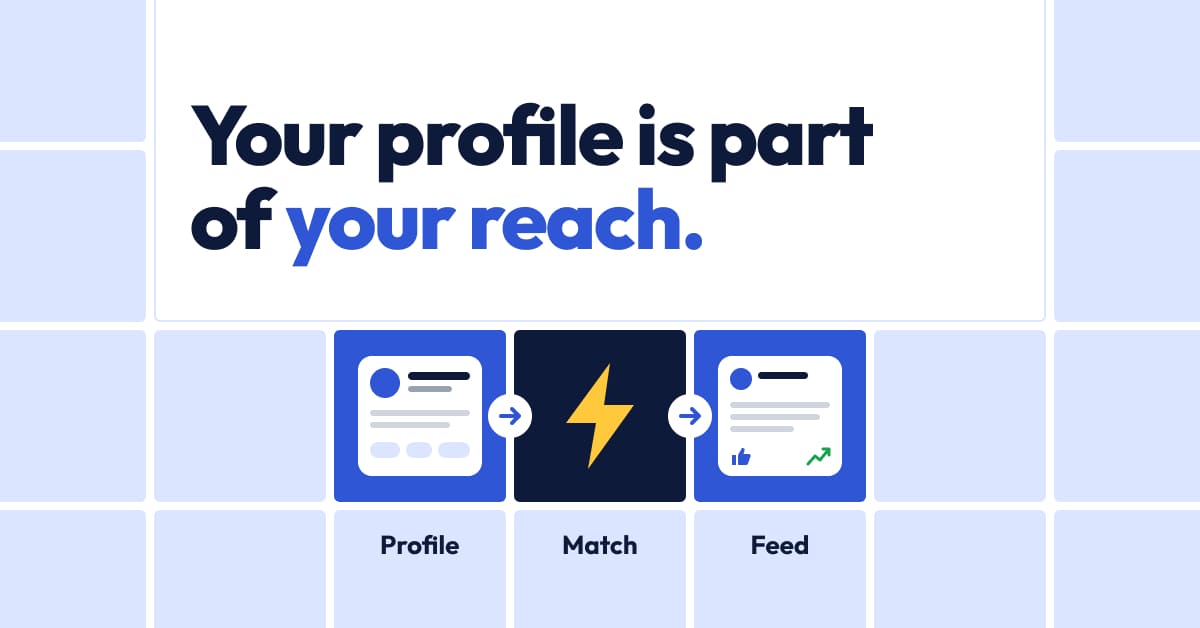
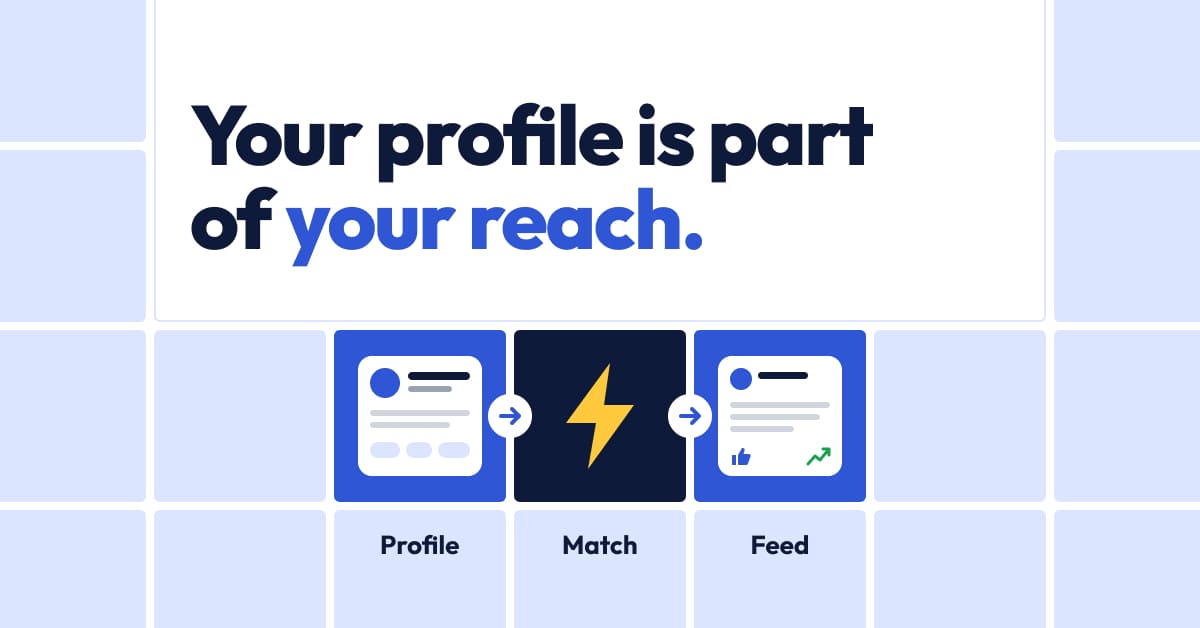
The LinkedIn feed in 2027 will likely rank your posts less on who you know and more on what your profile and your writing say you know. That is a forecast, built from changes LinkedIn has already announced, not a published rule for 2027. If your headline, your About section and your posts all describe the same expertise for the same buyer, the feed has a reason to show you to people outside your network.
This guide separates what LinkedIn has confirmed from what we expect next, then gives you a 30 minute audit to run before January.
What has LinkedIn actually announced?
Three primary sources matter here, all from LinkedIn itself. In March 2026, LinkedIn said it is upgrading feed ranking with Generative Recommenders and large language models (LLMs), working to make engagement pods ineffective and curb comment automation, and showing less engagement bait. The same day, its engineers published how the next generation Feed works. On November 9, 2026, they added a post on Profile Relevance, a system that matches member profiles to posts from people beyond their network.
Each card below pairs a sourced announcement with a labeled forecast and one action. Only the announcement and the source are fact.
Forecasts are predictions, not facts. LinkedIn has not published a ranking plan for 2027.
How does the feed pick your post?
LinkedIn describes two steps:
LinkedIn’s own example makes the point. A member interested in "electrical engineering" who engages heavily with posts about "small modular reactors" could be missed by a keyword system. The LLM knows the two topics are related. For you, that means the exact words in your post matter less than the subject it clearly covers.
Sprout Social’s January 2026 explainer describes an older four-factor view that still helps: a quality check for spam and policy, a test across part of your network that expands if engagement holds, each viewer’s own activity, and how relevant you and your post are to them. Nothing in LinkedIn’s newer posts contradicts that view. They add a deeper understanding of topic and professional context on top of it.
What is Profile Relevance, and why does it matter?
Most 2027 advice will focus on post formats. The more useful signal is Profile Relevance, because it ties your profile to your reach. LinkedIn says it built the system because content beyond a member’s network can be hard to discover, particularly for creators who are still building their audience.
LinkedIn says the system builds a summary of each member from the professional information they choose to share. For posts, it builds embeddings from the text, titles and transcripts, plus author location when available:
Two details matter for small teams. First, LinkedIn added member and author country names to the prompts so regional context is not lost, which means regional relevance counts. Second, it added a minimum engagement threshold: a Profile Relevance post must receive one like, comment or share from an unconnected member before it is recommended. LinkedIn reports these results from online experiments with that version:
LinkedIn’s own experiment results for member experience, not a promise of reach for creators.
The forecast: if this retrieval source keeps growing, a founder with a sharp profile and a consistent subject can reach strangers without a large following. A founder with a vague profile and scattered topics gets matched to nobody in particular.
What should you stop doing before 2027?
What does nobody know yet?
LinkedIn has not published a 2027 ranking plan. It has not said how much weight Profile Relevance carries against other sources, and it does not publish an ideal post length, posting time or hashtag count. Any article that gives you exact numbers for those is guessing. Treat advice as a test to run, not a rule to follow, and compare results on your own posts. Our guides to LinkedIn trends for 2027 and how often to post take the same approach.
How do you audit your profile and posts in 30 minutes?
Run this once, then repeat each quarter.
What does the audit look like for an MSP founder?
This is an illustration, not a case study or real data. Say a managed service provider owner has the headline "Founder at Acme IT" and posts about hiring, golf, a conference photo and a Microsoft licensing change in the same month. The profile gives the feed little to match. The topics are scattered, and the people who react are mostly staff and vendors.
After the audit, the About section opens with the same line as the headline. For four weeks every post covers cloud cost, and comments go on posts by CFOs and IT directors. The measure is not impressions. It is how many reactions come from CFOs and finance leads outside the founder’s connections. If that number rises, the feed is matching the profile to the right readers. If it does not move, change the topic, not the hashtags.
How do you keep this up without losing your week?
The audit is easy. The weekly posting is where founders drop off. A fixed routine helps: collect one real story or number, draft a post around the single topic, edit it so it sounds like you, and schedule it. If you use AI for drafts, keep your own facts in them, as covered in how to make AI LinkedIn posts sound like you. SocialPost.ai drafts on-brand LinkedIn posts for you every week and schedules them with its scheduler, and nothing goes live until you approve it.
Frequently asked questions
What is the LinkedIn algorithm in 2027?
LinkedIn has not published a 2027 version. Based on its 2026 announcements, the feed is moving toward LLM-based ranking that matches posts to members by professional topic, with less weight for engagement bait, pods and automated comments. That direction is a forecast for 2027, not a confirmed rule.
Does my profile affect how many people see my posts?
LinkedIn says Profile Relevance uses profile fields such as headline, summary, skills, work history and education to match members to posts from beyond their network, and recommends those posts only after an unconnected member has liked, commented on or shared them. A clear profile gives the system better information about who should see your posts.
Do engagement pods still work?
LinkedIn said in March 2026 that it is working to make engagement pods ineffective and to curb comment automation and unauthorized third-party tools. We cannot measure pod results, and the stated direction is against them, so we would not rely on them.
Do I need a large following to reach new people?
LinkedIn says it built Profile Relevance partly because content beyond a member’s network is hard to discover for creators still building their audience. A post needs at least one like, comment or share from an unconnected member before this source recommends it, so early reactions from the right strangers matter.
How often should I post for the 2027 feed?
LinkedIn has not published a frequency target. A steady weekly post on one topic is a sound test, and you can raise it if your results hold.
Are third-party LinkedIn algorithm numbers reliable?
Treat them as directional. LinkedIn does not publish exact ranking weights, so figures about ideal length or timing come from outside observation, not from LinkedIn.
What should you do this week?
Run the 30 minute audit, then plan your first four posts on one topic. Start free at SocialPost.ai and have the first one drafted for you to approve.